
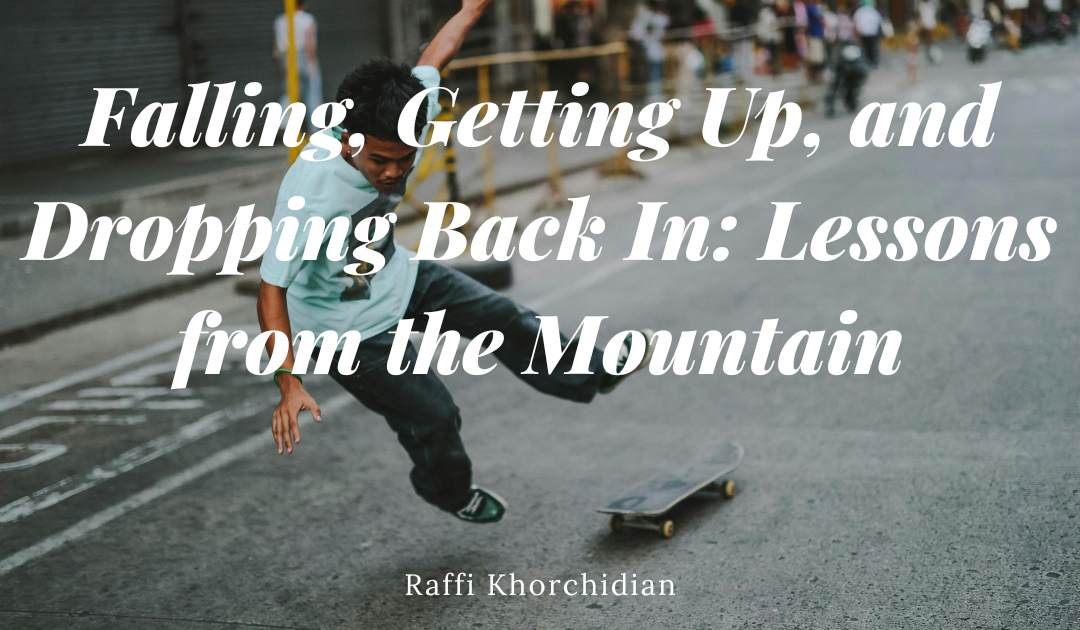
 Everyone who skis long enough will fall. Not the graceful, cinematic kind either—but the awkward tumble where skis cross, poles scatter, and you lie there for a moment staring at the sky, wondering how gravity won again. Falling is not a failure on the mountain. It’s part of the contract. And oddly enough, it’s where some of skiing’s most meaningful lessons live.
On the surface, skiing looks like motion and confidence—smooth turns, speed, control. But beneath that is a quieter rhythm: attempt, fall, recover, try again. Over and over. The mountain doesn’t reward perfection; it rewards persistence.
The First Fall Is Always the Hardest
Early in a ski day—or early in a ski life—falling feels personal. Embarrassing. You replay it in your head: What did I do wrong? Who saw that? The cold seeps in, your gloves fill with snow, and for a brief moment, quitting sounds reasonable.
But the mountain doesn’t react. It doesn’t judge or rush you. It just waits.
That neutrality is powerful. Falling reminds you that mistakes aren’t catastrophic—they’re information. The edge caught because you leaned back. The turn washed out because you rushed it. Each fall is feedback, delivered without commentary. What you do next is up to you.
Getting Up Is a Skill—Physically and Mentally
Anyone who skis knows that getting up after a fall can be harder than the fall itself. Skis tangled, legs tired, snow deep. You have to pause, breathe, and do things in the right order. Rush it, and you’ll fall again.
There’s a metaphor hiding here, and it’s not subtle.
Getting up—really getting up—requires patience. It asks you to slow down when your instinct is to hurry. It forces you to acknowledge where you are before moving forward. The mountain doesn’t care how fast you want to recover. It only responds to balance.
In life, we often want to skip this part. We want to stand immediately, act immediately, prove we’re fine. Skiing teaches you that recovery has steps, and skipping them only makes things worse.
The Quiet Choice to Drop Back In
The most important moment doesn’t come when you fall or even when you stand up. It comes right after—when you point your skis downhill again.
This is the moment no one applauds. It’s quiet, internal, almost invisible. You decide whether fear gets the final word or whether curiosity does. You decide whether the last mistake defines the next move.
Dropping back in after a fall takes courage, but not the loud kind. It’s a calm courage. The kind that says, I’ll go again, but smarter. Softer. More aware.
The mountain teaches you that confidence isn’t the absence of fear—it’s the willingness to continue alongside it.
Progress Isn’t Linear (and That’s Normal)
Some days, everything clicks. Turns feel effortless, terrain opens up, and you wonder why you ever struggled. Other days, you fall on runs you’ve skied a hundred times. Progress in skiing is messy and uneven, and that can be frustrating—until you realize how honest it is.
The mountain doesn’t allow shortcuts. It reflects your energy, focus, and humility back at you. Bad days don’t erase good ones. They’re just part of the cycle.
Skiing reframes progress as something cumulative, not consecutive. You don’t move forward by never falling; you move forward by learning how to fall without quitting.
Humility at Speed
One of skiing’s great paradoxes is that it makes you feel powerful and small at the same time. You’re moving fast, carving lines into snow—but you’re also deeply aware that conditions can change instantly. Ice appears. Light flattens. Weather moves in.
Falling reminds you that control is never absolute. And that’s not a weakness—it’s grounding. Humility keeps you alert. It keeps you learning. It keeps you alive.
On the mountain, arrogance shows up quickly and leaves bruises.
Carrying the Lesson Off the Slopes
What makes these lessons stick is how transferable they are. Life, like skiing, doesn’t reward flawless execution. It rewards resilience. You will fall—socially, professionally, emotionally. Sometimes publicly. Sometimes harder than expected.
Skiing teaches you not to dramatize the fall or romanticize the recovery. Just assess, adjust, and drop back in.
You don’t need a perfect plan. You need balance, awareness, and the willingness to try again with slightly better judgment.
Why We Keep Coming Back
If falling is inevitable, why do skiers keep returning? Because the mountain gives something rare: a safe place to practice resilience. A space where falling doesn’t define you—it refines you.
Every time you get up, click back in, and push off, you reinforce a quiet truth: setbacks are temporary, movement is possible, and momentum can always be rebuilt.
And sometimes, after a fall, the next run is the best one of the day.