
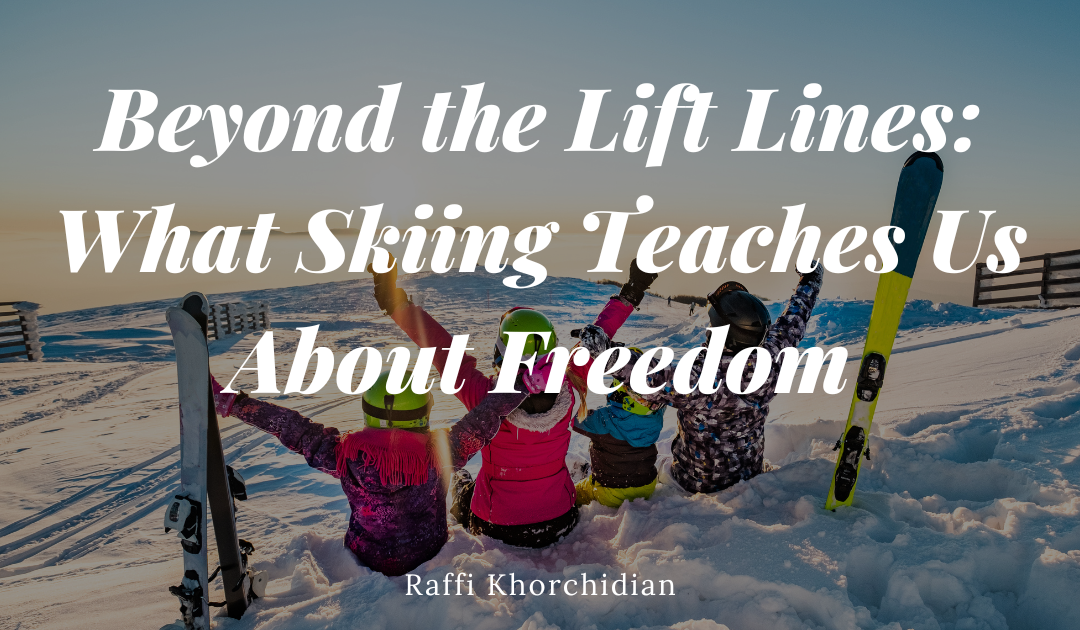
The Flow of Presence
For many people, skiing begins with lift lines, trail maps, and carefully groomed runs. It starts with clipped boots, clicking bindings, and the slow ascent up the mountain alongside dozens of others. Yet for those who return to the slopes season after season, skiing quickly becomes something deeper. Beyond the logistics and routines, skiing offers a powerful lesson in freedom—one that extends far beyond the mountain itself.
At its core, skiing is about movement without interruption. Once you push off from the top of a run, gravity takes over. There are no stoplights, no notifications, and no distractions demanding your attention. The mountain asks only that you stay present. Every turn requires focus, balance, and trust in your own ability. In a world filled with constant noise and pressure, this uninterrupted flow is rare, and it’s precisely what makes skiing feel liberating.
The presence skiing demands is both mental and physical. You are acutely aware of the snow beneath your skis, the slope’s gradient, and the wind brushing your face. Each moment is a decision—how much pressure to put on your edges, when to flex your knees, or whether to take that small jump over a natural rise in the terrain. In these moments, the mind clears, and the body responds instinctively. Many skiers describe this as meditative, not because the experience is slow, but because it requires full attention to the present. It is in this focus that freedom emerges—not from the absence of constraints, but from the complete engagement with the moment at hand.
Freedom Through Choice and Courage
Skiing also teaches freedom through choice. Unlike many activities, there is no single “right” way to ski a mountain. You choose your line, your speed, and your style. One skier may prefer wide, sweeping turns on groomers, while another seeks tight trees or untouched powder. Each decision is personal and immediate. That sense of autonomy—choosing your path and committing to it—creates a feeling of independence that is hard to replicate elsewhere.
The mountain itself reinforces this lesson. Nature sets the rules, not schedules or expectations. Weather changes plans. Snow conditions demand adaptability. Some days reward patience and precision, while others encourage boldness and speed. Skiing teaches that freedom doesn’t mean total control—it means learning how to move confidently within ever-changing conditions. This understanding often carries into daily life, helping skiers become more comfortable with uncertainty and change.
Another powerful aspect of skiing’s freedom lies in overcoming fear. Standing at the top of a steep run or unfamiliar terrain requires courage. The first turn is often the hardest, but once it’s made, confidence grows. Skiing teaches that fear doesn’t disappear—it becomes manageable through preparation, trust, and action. Each successful run reinforces the belief that perceived limits can be pushed, expanding not only skill but self-belief.
Even small risks on the slopes—like navigating icy patches, sudden drops, or tree runs—carry lessons about embracing challenges with awareness. These experiences encourage skiers to trust their instincts, respect their limitations, and celebrate incremental progress. The freedom to make choices and face fears builds resilience, a trait that extends well beyond skiing into work, relationships, and personal growth.
Connection, Time, and Reflection
Community plays an interesting role in skiing’s sense of freedom as well. While skiing is deeply personal, it is often shared. Riding lifts with friends, meeting strangers on the mountain, or exchanging nods with fellow skiers creates a quiet sense of connection. There is freedom in knowing you belong to a larger culture that values movement, adventure, and respect for the outdoors, without the pressure to perform or conform.
Beyond the physical experience, skiing offers a different perspective on time. A day on the mountain is structured, yet unhurried. Runs are repeated not out of obligation but enjoyment. The rhythm of ski, ride, repeat creates a natural pace that contrasts sharply with everyday routines. Many skiers find that hours pass unnoticed, replaced by a simple awareness of cold air, soundless snow, and steady motion. This altered sense of time is another subtle form of freedom, allowing skiers to detach from schedules and reconnect with their own rhythm.
Skiing also provides moments for reflection. At the top of the mountain, looking out over snow-covered peaks and valleys, one can feel a sense of perspective that is difficult to find in the bustle of daily life. These vistas remind skiers of the vastness of the world and their own place within it. In these quiet moments, freedom is experienced as clarity—an ability to breathe, think, and simply exist without distraction.
Mastery and the Rewards of Practice
Perhaps the greatest lesson skiing teaches is that freedom is earned through practice. Mastery doesn’t come instantly. It develops through falls, restarts, and gradual improvement. Over time, movements become instinctive, allowing skiers to explore more terrain with less effort. This progression mirrors life: the more skills and confidence you build, the more freedom you gain to choose your direction.
Skiing demands patience, persistence, and adaptability. Beginners may struggle with coordination and balance, while intermediate and advanced skiers learn to tackle more technical lines with precision. Each stage of skill development brings a greater sense of autonomy and joy. The more competent you become, the more freely you can navigate the mountain and make bold decisions, whether choosing a challenging run or experimenting with style.
Beyond technical skill, skiing encourages creativity. How you approach each run—your line, rhythm, and choice of speed—becomes an expression of individuality. The freedom to innovate and improvise fosters self-confidence and reminds skiers that rules exist to guide, not constrain, personal growth.
Freedom Beyond the Slopes
Beyond the lift lines and marked trails, skiing becomes more than a sport. It becomes a reminder that freedom is found in presence, choice, and trust—in yourself and the moment you’re in. Long after the skis are stored and winter fades, those lessons remain, shaping how skiers move through the world with clarity, confidence, and a renewed sense of possibility. Skiing teaches us to embrace life with awareness, to take thoughtful risks, and to find joy in motion.
Whether carving through powder, gliding down groomers, or navigating challenging backcountry terrain, skiing reminds us that freedom is not a destination—it is a practice. The mountain shows us that life’s beauty and liberation lie in engaging fully with each moment, trusting our skills, and daring to explore paths less traveled.